Fallen Souls: Idle RPG
- 4.3
- Rating
- 10.00K
- Installs
- Free
- Price

 Analysis by App-foxy
Fallen Souls is the kind of role-playing game that makes a confident first impression through a simple promise: collect powerful characters or resources, improve them, and keep pushing through a dark fantasy world. I spent time with it as a free mobile RPG, and my reaction was mixed in a useful way. The early loop is easy to understand and satisfying, but the more important question is whether the routine remains enjoyable once the first upgrades stop arriving so quickly.
Developed by PERASPERA GAMES PTE. LTD., the game is aimed at players who like gradual progression more than long, complicated sessions. It is available for free, carries an Everyone 10+ age rating, and runs on Android devices using version 7.0 or later. The current version is 1.0.10, and the store page shows a 4.3 average from around 2.9 thousand ratings. Those details place it in a familiar mobile RPG space, but the real test is how well its collection and upgrade loop fits into everyday play.
Why the first week feels so inviting
The opening appeal comes from momentum. Fallen Souls gives me a clear reason to keep checking in: gather something useful, improve my strength, and see whether the next step opens a more rewarding part of the journey. That structure works especially well when I only have a few minutes available. I do not need to prepare for a long tactical session before making progress, which makes the game comfortable to open during a commute, a lunch break, or while waiting for an appointment.
You May Also Like

 AccuWeather: Weather Radar
AccuWeather Review: A Quick, Clear Forecast for Everyday Decisions
For everyday plans, the best forecast is the one you can understand quickly. AccuWeather makes rain timing, radar, and local conditions easy to act on, with a few trade-offs.

 Hill Climb Racing
Why Hill Climb Racing Still Turns Crashes Into One More Run
A tiny car, a bumpy hill and one more upgrade: Hill Climb Racing keeps resurfacing because its simple chaos makes every near-miss feel personal.

 AliExpress - Shopping App
AliExpress Makes Global Shopping Feel Personal, but Shoppers Bear the Risk
AliExpress turns a global marketplace into a pocket-sized discovery engine. Its reach is useful, its shopping loop compelling, and its trade-offs easy to miss.

 Lords Mobile: Kingdom Wars
Lords Mobile Is a Kingdom-Building Routine, Not a Quick Match
A case-by-case verdict on the building, battles, device demands, and social commitments that make Lords Mobile rewarding for some players and exhausting for others.

 PDF Scanner app - TapScanner
TapScanner Makes Paperwork Easier to Capture, Check, and Share
TapScanner makes scanning with a phone feel less like a rescue operation and more like a dependable step in getting work done. Its capture tools are useful, though not flawless.

 Block Blast!
 Shows How Much a Puzzle Game Can Leave Out
A quiet grid game shows why puzzle players increasingly value instant clarity, repeatable skill and low-pressure play—and where the genre still needs to catch up.
More From Our News Desk
View All News


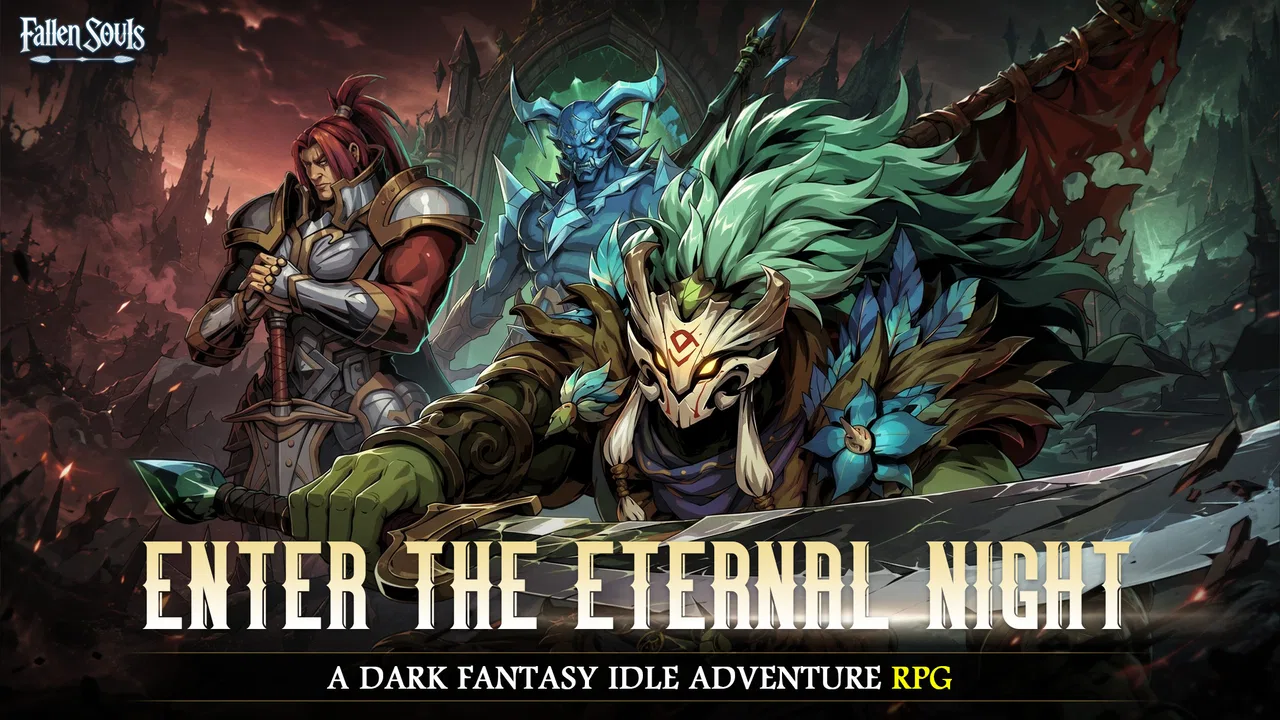
The dark mythic setting also helps the game stand apart from brighter collection RPGs. Its atmosphere suggests danger and fallen heroes rather than a cheerful adventure, and that gives ordinary upgrades a little more personality. I found the theme most effective when it supported the sense that my growing roster was gradually reclaiming power from a hostile world. It is not enough by itself to carry a game, but it gives the early progression a recognizable identity.
My first practical tip is to resist spending every early resource immediately. The temptation is to upgrade whatever is available, yet a short pause to compare which character, item, or improvement actually helps the current obstacle makes the next few sessions smoother. In a game built around collecting and evolving, small decisions matter more when resources become less abundant later. Treating the opening rewards as a testing budget is more useful than treating them as permission to improve everything at once.
The collection side is also a good fit for players who enjoy seeing a roster take shape. Each new addition creates a small moment of discovery, while upgrades give older additions a reason to remain relevant. That is more engaging than simply watching one hero become stronger forever. At the same time, anyone expecting a deep, manual role-playing system should adjust their expectations. Fallen Souls is better understood as a progression-focused mobile RPG than as a large, story-heavy adventure with constant player control.
A realistic everyday scenario shows where it works best. I can open the game in the evening, review what has accumulated, strengthen the most useful part of my team, and attempt the next available challenge without committing to a long play session. The game fits around my day instead of demanding that my day fit around it. That convenience is a genuine strength, particularly for people who like RPG growth but rarely have time for a console-length session.
There is also a useful distinction between playing for progress and playing for mastery. During the first week, the progress itself is the reward. New collections and visible improvements make even modest activity feel worthwhile. Players who want difficult battles decided by precise timing may find the experience less compelling, while players who enjoy planning a steady climb will probably understand the appeal quickly.
How to approach the collection loop
I recommend choosing a small core of dependable upgrades rather than spreading attention across every option. This is not because variety has no value, but because an unfocused roster can make the account feel busy without making it meaningfully stronger. When a game asks me to collect, upgrade, and evolve, I look for a clear short-term goal: strengthen the group that helps me pass the next wall, then use the resulting rewards to widen the roster afterward.
That approach also makes it easier to judge whether the game is genuinely fun for me. If I enjoy deciding where the next improvement goes, the loop has substance. If I am only tapping through rewards while waiting for the next automatic increase, the novelty is already fading. This is an important early test because the game’s long-term value depends less on the first burst of rewards and more on whether those small decisions remain satisfying.
What remains valuable after the novelty fades
After the first month, the question changes from “Can I make progress?” to “Do I care about this particular progress?” Fallen Souls has recurring value for players who like maintaining a growing collection and checking incremental improvements. The game can become a comfortable daily ritual, especially when I want something lighter than a competitive action game or a demanding strategy title.
Its strongest long-term quality is the low barrier to re-entry. I do not need to remember a complicated control scheme after taking a day away, and the central goal remains obvious when I return. That makes it more forgiving than many action-oriented RPGs. A missed session does not necessarily mean I have forgotten how to play; I can simply review my progress and decide what deserves attention next.
However, low friction can become low involvement. The same accessibility that makes the game easy to revisit may also make it feel interchangeable if the collection and upgrade choices stop producing meaningful differences. I noticed that the long-term experience depends heavily on whether I enjoy the routine itself. If I need a strong narrative, frequent surprises, or highly expressive combat to stay interested, this is not the safest choice.
For month-to-month use, I would create a simple rotation. One session can focus on checking progression, another on improving the main team, and another on experimenting with a less-used part of the collection. This prevents every visit from becoming the same sequence of taps. It also reveals whether the game offers enough room for personal planning rather than merely presenting a checklist.
That rotation is one of the more useful ways to protect the game from becoming background noise. I found that deliberately changing the purpose of a session made the collection feel more active. The trade-off is that the player has to supply some of that structure. If I open the game without a goal, the routine can feel automatic; if I arrive with a specific question—what is the best next upgrade, which part of the roster deserves attention, or whether a new improvement changes my progress—the same systems feel more engaging.
Compared with a traditional single-player RPG, Fallen Souls offers less of the feeling that I am moving through a carefully authored journey. Compared with a competitive RPG, it is less dependent on keeping up with other players. Its natural audience sits between those groups: people who want a persistent character-collection habit without the time commitment of a full adventure or the pressure of a competitive ladder.
The free entry point helps with that decision. I can try the basic loop before spending anything, which is important because enjoyment here is personal and not easy to judge from screenshots. The in-app purchases range from $0.99 to $99.99 per item, so I would treat spending as optional support for a hobby rather than as part of the initial test. I would first play long enough to learn whether the daily routine itself is enjoyable.
That price spread also creates a clear trade-off. A player who is comfortable progressing slowly may be perfectly happy to remain free-to-play. Someone who dislikes any sense of waiting or resource pressure should be cautious before purchasing, because spending can change the pace without necessarily changing the underlying loop. My advice is to set a personal limit before buying anything and judge each purchase by the enjoyment it adds, not by the progress it promises.
The maintenance burden of a daily RPG
Maintenance is modest in time but real in attention. A collection game asks me to keep track of upgrades, decide what to improve, and return often enough that progress does not feel disconnected. That is manageable when I use short sessions, but it can become a chore if I feel obligated to inspect every reward or optimize every choice.
The best way to keep the burden under control is to establish a stopping point. I prefer opening the game with one practical objective and leaving after completing it, rather than allowing every available reward to dictate the length of the session. This is especially helpful for idle-style progression, where the game can encourage repeated checking even when there is no important decision waiting.
Another useful habit is to separate evaluation from collection. I do not need to decide the permanent value of every new addition the moment I receive it. I can place it in a temporary “test” role, observe whether it helps my current goal, and only then invest more seriously. That reduces wasted resources and prevents the roster from becoming a pile of partially developed possibilities.
Players wondering whether the game is suitable for an older Android device should note the stated minimum requirement of Android 7.0. That makes the entry point reasonably broad, although the experience can still vary between devices. I would keep expectations practical: the operating-system requirement tells me whether installation is supported, not whether every phone will deliver the same smoothness during extended play.
The game is also easier to maintain when I decide what kind of player I am. If I want a relaxing collection habit, I can accept slower progress and avoid turning every session into optimization. If I want maximum efficiency, I should expect more mental bookkeeping. Fallen Souls supports both attitudes, but the second one makes the game feel like work more quickly.
Where fatigue begins to appear
The main source of fatigue is repetition without a meaningful change in decision-making. Collection, upgrading, and evolving are attractive verbs at the beginning, but they need variety to remain motivating. When the next action feels obvious, the game risks becoming a routine that I perform rather than a game I actively choose.
This is where Fallen Souls may lose players who need constant novelty. The dark setting can create a strong first impression, but atmosphere cannot replace fresh goals forever. If the player’s role remains mostly focused on collecting stronger options and repeating the same improvement cycle, the experience may eventually feel more like account maintenance than role-playing.
Another friction point is the emotional distance that can appear in a broad collection. More additions are not automatically better additions. I become invested when a character or upgrade changes how I approach a challenge; I become less interested when it only increases a number. The game is most convincing when progression feels like a choice, not merely a larger total.
There is also a difference between patience and stagnation. Slow progress can be satisfying when I understand what I am working toward. It becomes frustrating when the next meaningful improvement feels too far away or when the game encourages me to look toward purchases instead. Because the game includes optional purchases up to $99.99 per item, cautious players should decide early whether the free pace feels comfortable and avoid treating spending as a solution to boredom.
I would skip Fallen Souls if I wanted a strongly narrative RPG, complex turn-by-turn tactics, or a game that rewards fast reflexes. A conventional story-driven adventure is a better fit for someone who wants memorable characters and a clear ending. A more hands-on action RPG is better for someone who wants every battle to depend on movement and timing. Fallen Souls makes more sense for the player who enjoys the quiet satisfaction of returning to a growing collection.
It may also be a poor match for anyone who dislikes recurring mobile routines on principle. Even a well-made progression system asks for repeated attention, and the game’s appeal is tied to that repetition. If opening an app every day feels like an obligation rather than a pleasant habit, the free price will not solve the problem.
Questions I would ask before installing
Is it genuinely free to start? Yes. I can enter the game without paying, which makes a trial worthwhile. I would spend the first sessions learning the progression rhythm rather than buying immediately. The important question is not whether purchases exist, but whether I still enjoy the game when I let progress happen at my own pace.
Is it suitable for younger players? The listed rating is Everyone 10+, so families can use that as the starting point when deciding whether it fits a particular player. I would still consider the child’s comfort with collection mechanics and optional purchases. The age label is useful, but it does not replace a parent’s judgment about spending habits or screen time.
Can I play it casually? That is probably its best use. Short visits, gradual improvement, and a collection that grows over time make it approachable for casual RPG players. The caveat is that casual play means accepting that progress may be slower than for someone who spends more time or money. That is not necessarily a weakness, but it is a choice the player should make consciously.
Will it replace a larger RPG? In my view, no. It can complement a larger game by filling spare moments, but its appeal is based on compact progression rather than a vast adventure. I would install it alongside a story-focused RPG only if I wanted a lighter second game with a persistent upgrade loop.
How long will I keep it installed? That depends on whether the collection decisions continue to feel personal. My practical test is simple: after the initial excitement, do I open the game because I have a goal, or only because a notification or accumulated reward is waiting? If I still have goals, the game has earned more time. If I am merely clearing tasks, uninstalling it may be the healthier choice.
It is worth remembering that the game is still presented as a relatively small mobile release, with over ten thousand installs and 51 written reviews shown alongside its broader rating activity. I read that as a reason to judge it on its own current experience rather than on a large established community. The version available now is 1.0.10, so players who enjoy watching a game develop may find that early-stage feeling appealing, while those who want a mature, content-heavy RPG may prefer something with a longer history.
My long-term verdict on Fallen Souls
Fallen Souls earns lasting space on my device only under the right conditions. I would keep it installed if I wanted a darkly themed, free-to-start role-playing game built around collecting, upgrading, and returning for gradual progress. Its strongest qualities are accessibility, a clear opening loop, and the ability to fit into short everyday sessions without demanding the commitment of a large RPG.
I would not call it an automatic long-term recommendation for everyone. The game’s staying power depends on how much satisfaction I get from repeated improvement. Players who enjoy planning a roster, protecting resources, and setting small progression goals can build a comfortable habit around it. Players who need frequent story revelations, deep manual combat, or dramatic changes from one session to the next may feel the routine flatten out.
My final advice is to approach it as a slow-burn collection RPG, not as a replacement for a full adventure. Keep early resources focused, test new additions before investing heavily, set a clear stopping point for daily sessions, and decide on a spending limit before the optional purchases become tempting. Those habits make the experience calmer and help reveal its real value.
After the novelty fades, the game is judged by maintenance rather than spectacle. In my experience, Fallen Souls passes that test for a specific audience: casual RPG players who enjoy a persistent dark fantasy collection and do not mind repeating a familiar upgrade cycle. It is worth trying because the entry cost is free, but it earns a permanent place only if the small choices still feel rewarding after the first week. If your ideal mobile RPG is a steady habit rather than a dramatic campaign, this is the audience it serves best.
FAQs for Fallen Souls: Idle RPG
01What is Fallen Souls: Idle RPG, and how does its gameplay work?
Fallen Souls: Idle RPG is a fantasy role-playing game built around automated battles, hero collection, equipment upgrades, and gradual progression. Your team continues earning rewards while you are away, then you return to claim resources, improve characters, and challenge stronger enemies. It is designed for players who enjoy strategic team building without needing to control every attack manually.
02Can I play Fallen Souls: Idle RPG without spending real money?
Yes, you can download and play Fallen Souls: Idle RPG without making an immediate purchase. The game generally provides rewards through daily activities, quests, events, idle earnings, and progression milestones. However, optional purchases may speed up summoning, upgrading, or resource collection. Free players may need more patience and consistent activity, especially when facing difficult stages or competing in ranking-based content.
03Does Fallen Souls: Idle RPG require an internet connection?
An internet connection is normally needed for the main features of Fallen Souls: Idle RPG. Online access allows the game to synchronize idle rewards, save progress, load events, process advertisements or purchases, and connect to competitive or social modes. Some menus may open briefly without connectivity, but you should not expect the complete experience to work reliably offline.
04Is Fallen Souls: Idle RPG suitable for beginners and casual players?
Fallen Souls: Idle RPG is relatively accessible for beginners because battles are automated and early objectives introduce the main systems gradually. Casual players can make progress by collecting idle rewards and completing a few daily tasks. Nevertheless, the number of heroes, upgrade materials, equipment options, and game modes can become more complex over time, so learning team roles and resource management is important.
05What should I know about ads, in-app purchases, and game progress before downloading?
Before downloading Fallen Souls: Idle RPG, be aware that free-to-play progression may include optional advertisements and in-app purchases. Ads can sometimes provide extra rewards or speed up resource collection, while purchases may offer premium currency, bundles, or progression advantages. Because the game relies on online synchronization, uninstalling or changing devices may require an account connection to protect your progress.
Pros
- Playable offline
- making it convenient for short sessions without a connection.
- Idle rewards continue accumulating while you are away from the game.
- Multiple heroes and team combinations encourage experimentation.
- Auto-battle keeps progression simple when you prefer a hands-off experience.
- Dark fantasy visuals and effects give battles a distinctive atmosphere.
Cons
- Progress can slow considerably unless you upgrade heroes and equipment regularly.
- Random summons may make building a specific team difficult without patience.
- Repeated battles and upgrade tasks can feel monotonous over time.
- Limited resources require careful spending
- especially for free-to-play users.
- Some menus and systems may feel overwhelming for new idle RPG players.

Fallen Souls: Idle RPG
Gallery